

From horseback to Big Top:
The early days of circus

The word 'somersault' was often mutated to 'somerset' in the 19th century circus. A 'double somerset' was a momentous feat when first performed. Source: Wakefield Libraries
By preserving material from the dawn of the circus, library services around the country help us understand how this entertainment became an artform. They also help communities uncover stories that shine a light on local cultural heritage.
Have you ever wondered where, why and how the circus began?
When you think of the circus you might imagine clowns in big red shoes, exotic animals or extreme acrobatic feats. You might also think of daring modern circus performances involving fire or motorbikes.
While these traits might be part of performances today, when it first started the circus looked rather different...
A spectacle for the ages
Mentions of large scale entertainment spectacles can be found throughout history, and these can be thought of as predecessors of the circus we recognise today.
For example, this illustration is from Panvinio’s ‘De Ludis Circensibus’, from 1600, which means ‘On the circus games’ (the word ‘circus’ is Latin for ‘ring’ or ‘circle’). He was a historian of the Roman era, and this picture gives an idea of the scale of the 'shows’ that would be staged in Roman colosseums.
The ‘acts’ in Roman times were much more violent than you’d find in a modern circus – they would include fights to the death between gladiators, clashes between men and lions, and animal sacrifices.

Panvinio’s ‘De Ludis Circensibus’, from 1600. Source: Courtesy British Library 076648_589.l.2, 62
Where the modern circus began
Philip Astley, a former sergeant major, is widely thought of as the father of the modern circus. He was born in 1742 in Newcastle-under-Lyme, Staffordshire.
A lover of horses from an early age, he joined the Kings Light Dragoons at the age of 17. By the time he ended his service he had developed advanced trick horse-riding skills.
In 1768 he headed to London and set up a riding school on land where, today, you’ll find Waterloo train station. Here he demonstrated his tricks, such as standing on a horse’s back, dismounting and remounting, and standing on his head – all while his horse cantered round in a circle. His wife, Patty, was also a trick rider and performed alongside him.

From outdoor to amphitheatre
In refining tricks, Astley set the size of the circle as 42 feet in diameter. These dimensions are still used as the standard circus ring size today.
Eventually Astley progressed from his open-air riding school and opened an amphitheatre for his shows. In fact, he ended up having to build several venues in London alone, as they kept burning down – possibly due to the number of candles used to light the space.
Today, if you visit the garden at St. Thomas’ Hospital in London, you’ll find a plaque commemorating Philip Astley’s amphitheatre, which stood nearby.


More acts added
To his own daring equestrianism, Astley eventually added other acts to his shows. These included jugglers, tightrope walkers and, in 1770, a clown known as ‘Mr Merryman’.
Astley also added his son, John, as a performer. Similarly skilled on horseback, he would go on to perform for Marie Antoinette, the Queen of France, in 1783. He would have been just 15 years old. Astley junior’s performance left such an impression on the monarch that it helped his father gain permission to open an amphitheatre in Paris.
However, the French Revolution of 1789 led him to return to Britain, where he found competition from other circuses entertaining the masses.
While Astley is credited as the father of the circus, he was not the first to use the word ‘circus’ on the front of a venue.
That was Charles Hughes, a former member of Astley’s company, who opened his own amphitheatre. Astley and Hughes would become huge rivals.
Their competition spurred each of them on to find new audiences, resulting in them taking the circus to countries like France, Italy and Russia.

Miss Pearl was a regular performer for Cooke's Circus. 'Corde Roide Elastique' is French for 'elastic siff rope' - known today as tightrope. Source: Wakefield Libraries
Early circus promotion
Increased competition meant that, as the 19th century dawned, circuses needed to put increased effort into marketing themselves.
A touring company would arrive at a new place and need to whip up enthusiasm for its limited number of shows before heading off on the road again.
To get the attention of potential audiences, circuses started getting handbills and posters printed. These would be handed out and pasted to walls throughout towns.
The paper used to print these materials would be finer than what we see newspapers printed on today. The fact that they advertised specific performances on specific dates further emphasises that these ‘bills’, as they were known at the time, were intended to be ‘here today, gone tomorrow’.
Even so, some viewers found them interesting enough to keep. One of those people was Wakefield bookseller and stationer, John Cryer.
John Cryer collected handbills, flyers, pamphlets and other ephemera in Wakefield in the 1800s. There was enough material to fill dozens of scrapbooks.
These scrapbooks are now part of Wakefield Libraries’ Cryer Collection, which offers a fascinating glimpse into life in the town in the 19th century.
The printers of these disposable artefacts would surely be very surprised to hear they’re still around over a century later...


Explore 180 year-old circus posters
Click on the posters to enlarge and read them in full. You can also select interactive hotspots that provide more facts and context.
These 19th century circus posters, part of The Cryer Collection, have been preserved by Wakefield Libraries. They have been digitised here for the first time in collaboration with LibraryOn.
Click on the posters to enlarge and read them in full. You can also select interactive hotspots that provide more facts and context.
These 19th century circus posters, part of The Cryer Collection, have been preserved by Wakefield Libraries. They have been digitised here for the first time in collaboration with LibraryOn. Click on the posters to enlarge and read them in full. You can also select interactive hotspots that provide more facts and context.
These 19th century circus posters, part of The Cryer Collection, have been preserved by Wakefield Libraries. They have been digitised here for the first time in collaboration with LibraryOn.
What the early circus looked - and smelled - like
This excerpt from ‘Beneath the Big Top: A Social History of the Circus in Britain’, by Dr. Steve Ward, captures the sensations early circus audiences could expect:
An enormous glittering chandelier, lit by hundreds of candles, is suspended above the circular ring and casts a warm glow on the proceedings. The first thing you notice is the smell – of burning tallow candles, of the sawdust in the ring, the odor of horses and the stink of the crowd packed tightly together.
... The people in the upper gallery must have a marvelous view of that chandelier for the entry price of one shilling! It is hot up there and the heat from the candles and the crowd below gathers beneath the roof.
The orchestra is seated between the front of the stage and the ring and are playing a merry tune. In the ring at this moment is a young woman astride three white horses. As they gallop in a circle she balances on one leg on the middle horse and her diaphanous costume billows out behind her. The clown in the middle of the ring laughs and claps.

Reading recommendations from
Wakefield Libraries' Circus Doctor
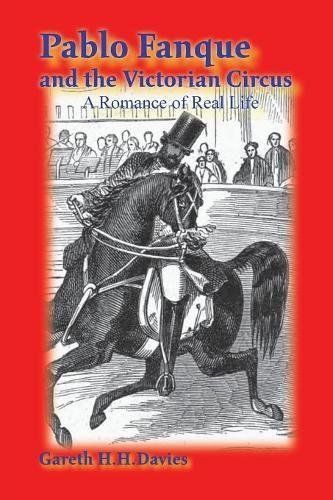
Having unearthed a cache of early circus bills, Wakefield Libraries engaged the help of Dr. Steve Ward to assess their significance. Here he recommends further reading for anyone interested in learning more about the history of circus.
Light relief in dark times
When circuses first became popular, most audiences would have had few comparable experiences. Travel was only for the very wealthy, and what leisure time people got would have been restricted to the area where they lived.
Moreover, the general quality of life was poor by today’s standards. People were barely expected to live past the age of 40. Disease, poor living conditions and limited medical care meant many didn’t even live that long.
Against this backdrop, a visit to the circus was a chance to leave behind daily worries and be entertained by dazzling feats. As menageries started to merge with circuses, the addition of rarely-seen animals added a further exotic dimension to the experience.

A dangerous profession – and spectacle
The safety of performers, workers and spectators didn’t tend to be prioritised by circus and menagerie owners. With animals, daring feats and temporary structures in the same space, there was a lot that could go wrong.
This was especially true considering the large audiences the circus could attract, before modern crowd control measures came into being. Here are just a few examples of times when tragedy struck.

Source: British Newspaper Archive
In May 1845 Cooke's Circus advertised that Mr. Nelson the clown, sitting in a tub, would be pulled along Yarmouth's River Bure by four geese.
Hundreds of people gathered on a bridge to watch. The bridge collapsed, causing the deaths of 79 people - many of them children. The bridge was later assessed to have substandard welding that contributed to its collapse. Nobody was held criminally responsible for the deaths. Today a memorial marks the site of the tragedy.